Warehouse robots need reliable realtime control. They also need an intuitive user interface. Can one OS handle both?
When it comes to forklifts, I am as dumb as they come. I had always assumed that one forklift is much like any other, aside from obvious differences in size and color. Boy, did I get that wrong. A quick perusal of Wikipedia reveals some 30 forklift types, ranging from “walkie stackers” (which, true to their name, are walked, not ridden) to “EX-rated lift trucks” (which, contrary to their name, aren’t designed to carry erotica but to be explosion proof).
Forklifts also come in driverless variants called automated guided vehicles, or AGVs. Case in point: the QNX-powered AGVs built by
Euroimpianti, a global leader in automated warehouse systems. These vehicles can, without human intervention, load and unload trucks, as well as move materials from one area of a warehouse or factory to another. Moreover, they can operate 24/7, using a list of prioritized missions downloaded from a central management system.
As you might expect, Euroimpianti uses the QNX Neutrino OS in the realtime control systems of its AGVs. After all, predictable response times and high reliability — qualities essential to safe operation of a driverless vehicle in a busy warehouse — are QNX Neutrino’s
stock-in-trade.
But here’s the thing: Euroimpianti has also decided to standardize on QNX Neutrino for the human machine interfaces (HMIs) of its operator panels. Why do that, when the HMIs could run on an OS like Windows Embedded or Android? The answer lies in the many features introduced in the
QNX Neutrino OS 6.6 and the new
QNX SDK for Apps and Media.
These features include a framework for creating apps and HMIs with industry-standard technologies like HTML5, JavaScript, and CSS, and a graphical composition manager that can seamlessly blend apps and graphical components created in HTML5, OpenGL ES, Qt, and other environments, all on the same display. In addition, the SDK offers secure application management, comprehensive multimedia support, mobile device connectivity, an optimized HTML5 engine, and other features for building mobile-class user experiences into embedded systems — including, of course, AGVs.
To quote Maurizio Calgaro, electronic engineering manager, Euroimpianti, “With its new QNX SDK for Apps and Media, QNX Neutrino enables us to create dynamic HMIs that leverage the latest Web technologies, including HTML5. Our operator panels and control systems can now run on the same, standards-based OS, and that means greater productivity for our developers and, ultimately, faster time-to-market for our solutions.”
 |
The QNX SDK for Apps and Media includes an HTML5 environment to create and deploy applications.
|
Euroimpianti's QNX-based robotic systems also include Cartesian robots, anthropomorphic robots, and selective compliance assembly robot arms (SCARA). The systems are deployed internationally in the automotive, beverage, cosmetic, food, dairy, electrical, glass, and pharmaceutical industries. Learn more on the
Euroimpianti Website, which includes many videos of the robots in action.
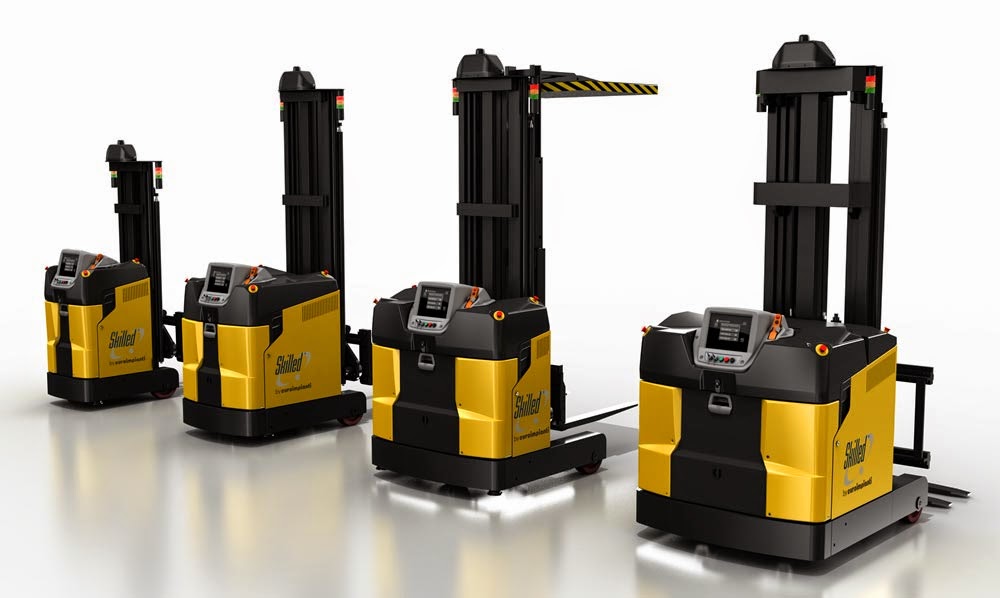 |
| Using the same OS for both realtime control and user interface control. |


